





The plastic problem – and the solution that already exists
🎥 A powerful short film from WWF.
The film shows the journey of plastic – from everyday products to a global environmental threat. In just one minute, you understand why the plastic problem concerns us all.
A material that was supposed to simplify life has become one of our biggest challenges.
But to understand the solution, we must first understand the problem.
Here you get a simple overview of the plastic crisis and why it concerns us all.
Plastic changed the world – from miracle to environmental crisis
Plastic has changed our world – but not in the way we thought.
When plastic was invented in the early 1900s, it was a revolution – cheap, light, and flexible.
In the 1950s, production took off. Disposable items and plastic packaging spread around the world and became a symbol of progress, modernity, and convenience.
But no one thought that the plastic would not disappear. It remains for hundreds of years.
Since then, humanity has manufactured over 8 billion tons of plastic – and almost all of it still remains.
🎥 From revolution to disaster.
The film shows historical flashbacks on the development of plastic.
1907
Origin
Bakelite is invented, the world’s first fully synthetic plastic.
Suddenly we can create cheap, strong materials completely without natural limitations.
1950
Mass production
Production of disposable items, packaging and consumer plastic explodes.
No one thinks about long-term consequences. Convenience wins.
1980
The escalation
Waste management cannot keep up. The first major warnings about microplastics and marine pollution are coming.
The plastic begins to be noticed. Researchers are alarming. The amount of waste is escalating.
2020
The collapse
The plastic reaches every continent. Pacific Garbage Patch is discovered. 8 billion tons produced and almost everything remains.
2025
The turning point
For the first time in history, there is a technology + economic model that can scale globally.
Chemical recycling + the plastic credit system means that waste gets a value.
2050
Two outcomes
If nothing is done:
More plastic than fish in the oceans.
3× more plastic production.
Microplastics in water, food, air.
If the solution is scaled globally:
Plastic gets circular value.
Waste becomes economy.
Emissions decrease.
The oceans recover.
“Plastic was the solution to everything – until we realized it never disappears.”
The plastic footprint
Every year, approximately 500 million tons of plastic are produced, and more than half is used only once.
Our consumption habits have grown faster than our ability to handle the waste.
🎥 500 million tons of plastic per year.
In the film, Jussi shows how enormous plastic production has become – it now weighs more than the entire world’s population, every year.
- Every minute, a truckload of plastic is dumped into the oceans
- Over 85% of all marine litter is plastic
- A plastic bag is used for an average of 12 minutes, but takes 400 years to break down
- Since 1950, we have created 8 billion tons of plastic – almost all of it remains
Plastic and humans
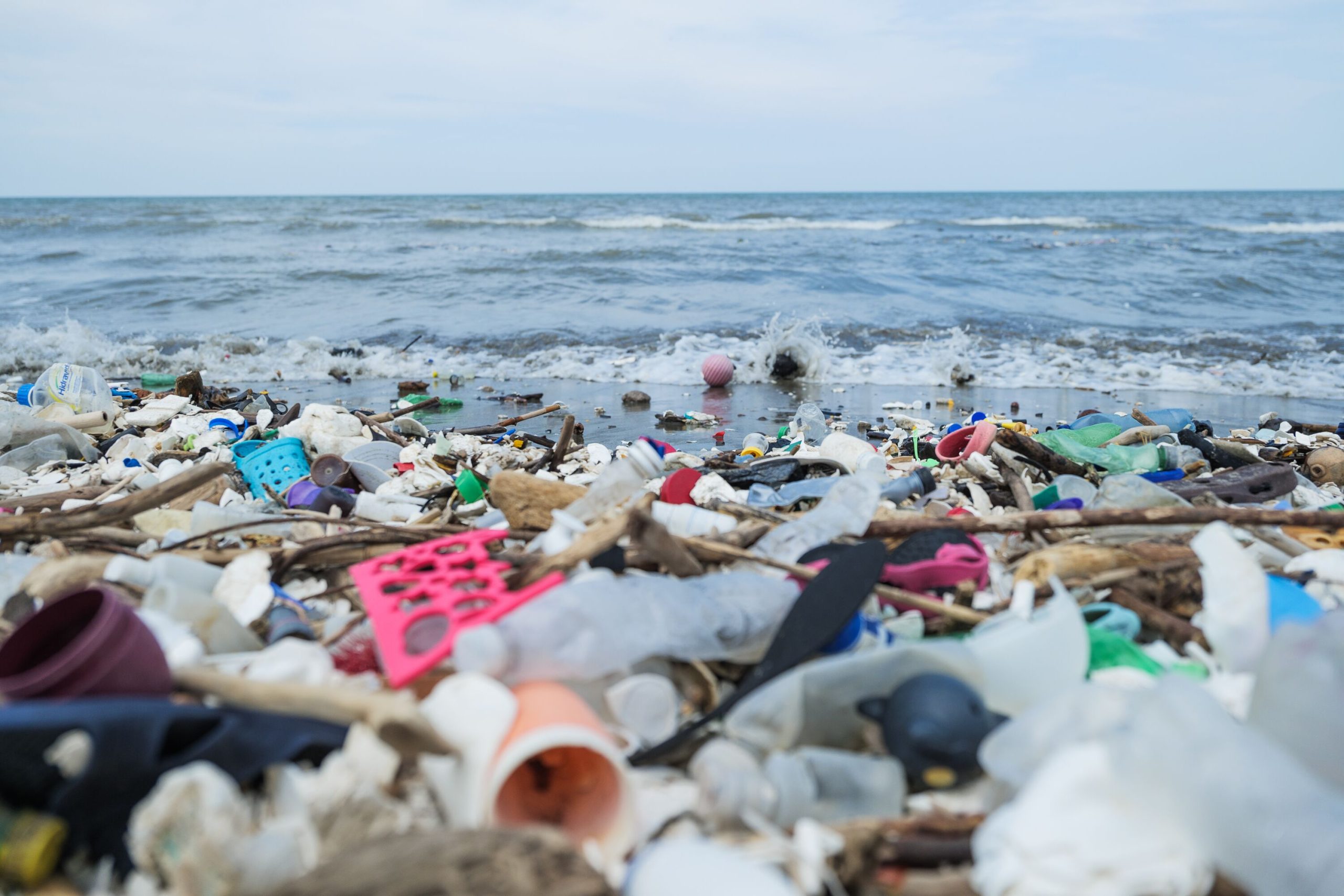
Plastic is now everywhere – in the oceans, in the air, in the food, in ourselves.
Researchers have found microplastics in blood, lungs and even in placentas.
We breathe, drink and eat plastic – literally.

5 grams per week
A person ingests approximately 5 grams of microplastics per week – equivalent to a credit card.

Plastic in newborns
A child today has plastic in their body already at birth.
99% from oil, gas & coal
99% of all plastic comes from oil, gas and coal.
“Plastic is everywhere – in our food, in our oceans, in our air.” – WWF
A single PET bottle can take up to 450 years to break down.
Only 1% of all plastic in the oceans floats on the surface – the rest lies on the seabed or in animals.
Plastic does not break down
– it only changes shape and never disappears.
Plastic and climate
The plastic industry is one of the biggest climate villains – and is still growing.
Almost all plastic is made from fossil fuels.
If nothing changes, plastic production will double by 2050.
🎥 Some of the dirtiest places on earth.
This film shows what plastic pollution looks like in some of the world’s most affected countries – and why the plastic crisis must be taken seriously.
Did you know that...
Plastic is not the enemy – the problem is what we do with it when we are done.
Thanks to chemical recycling, also called pyrolysis, plastic waste can now be converted into environmentally friendly bio-oil
– a new, clean raw material that can be used over and over again.
Pyrolysis is not a new invention – but making it clean, safe and working on a large scale is something no one has previously managed.
Corsair has developed the technology that makes it possible to convert plastic into oil with a purity that traditional pyrolysis has not been able to deliver.
“Plastic waste can become a valuable resource instead of a global problem.”
